

Wada Chokin Kobo|From Sacred Craft to Everyday Adornment

Wada Chokin Kobo is a metal engraving workshop founded in 1919 in Takaoka, Toyama. Rooted in Kanaya Chokinjo, established by founder Minoru Kanaya, the workshop is now led by fifth-generation craftsman Shunsuke Wada, who carries its techniques and aesthetic sensibility into the present day.
What lives within this workshop is both the handcraft that has supported temple ornaments and Buddhist altar fittings for more than a century, and the visual culture of Japan that continues to unfold through manga, anime, fashion, and design. Wada Chokin Kobo creates at the quiet intersection of these two currents.
From Digital Design to Traditional Craft

Before taking on the role of fifth-generation craftsman, Shunsuke Wada worked in Tokyo as a CG designer for a game company. Even while immersed in the front line of digital expression, from visuals to characters and moving images, the world of metal engraving that had been passed down through his family remained somewhere in the back of his mind.
When he returned to the family workshop and stepped back into the world of traditional engraving, something became clear. The motifs found in temple ornaments, the characters seen in manga and anime, the symbols used in fashion, and the forms found in tattoo culture all seemed to share a common foundation. Dragons, phoenixes, hannya masks, and other motifs were part of a distinct visual language of Japan.
Across different eras and fields, the same motifs have continued to be loved. Yet there are still few products that allow people to wear this culture naturally in everyday life. This open space, visible precisely because Wada had experienced both digital design and traditional craft, became the starting point for the workshop’s new direction.
Crafting by engraving stories.― Wada Chokin Kobo Philosophy
Takaoka, Toyama: A Metalworking City with 400 Years of History
The workshop is located in Takaoka, Toyama, a city known throughout Japan as a center of metal craft with around 400 years of history.
Takaoka remains one of Japan’s leading regions for copper and brass casting, as well as metal coloring techniques. Many Buddhist altar fittings, ritual objects, and shrine-related metalworks are still supported by the skills cultivated in this area.
It was here in Takaoka that Minoru Kanaya opened Kanaya Chokinjo in 1919. More than a century later, Wada Chokin Kobo continues to build upon the techniques accumulated in this land.

What Remains, and What Has Changed
The work of Wada Chokin Kobo is shaped by two forces: the tradition it has inherited, and the perspective gained from looking beyond that tradition. Where these two meet, the workshop’s unique expression begins to take form.
Engraving for Sacred Ornamentation, and Traditional Black Finishing
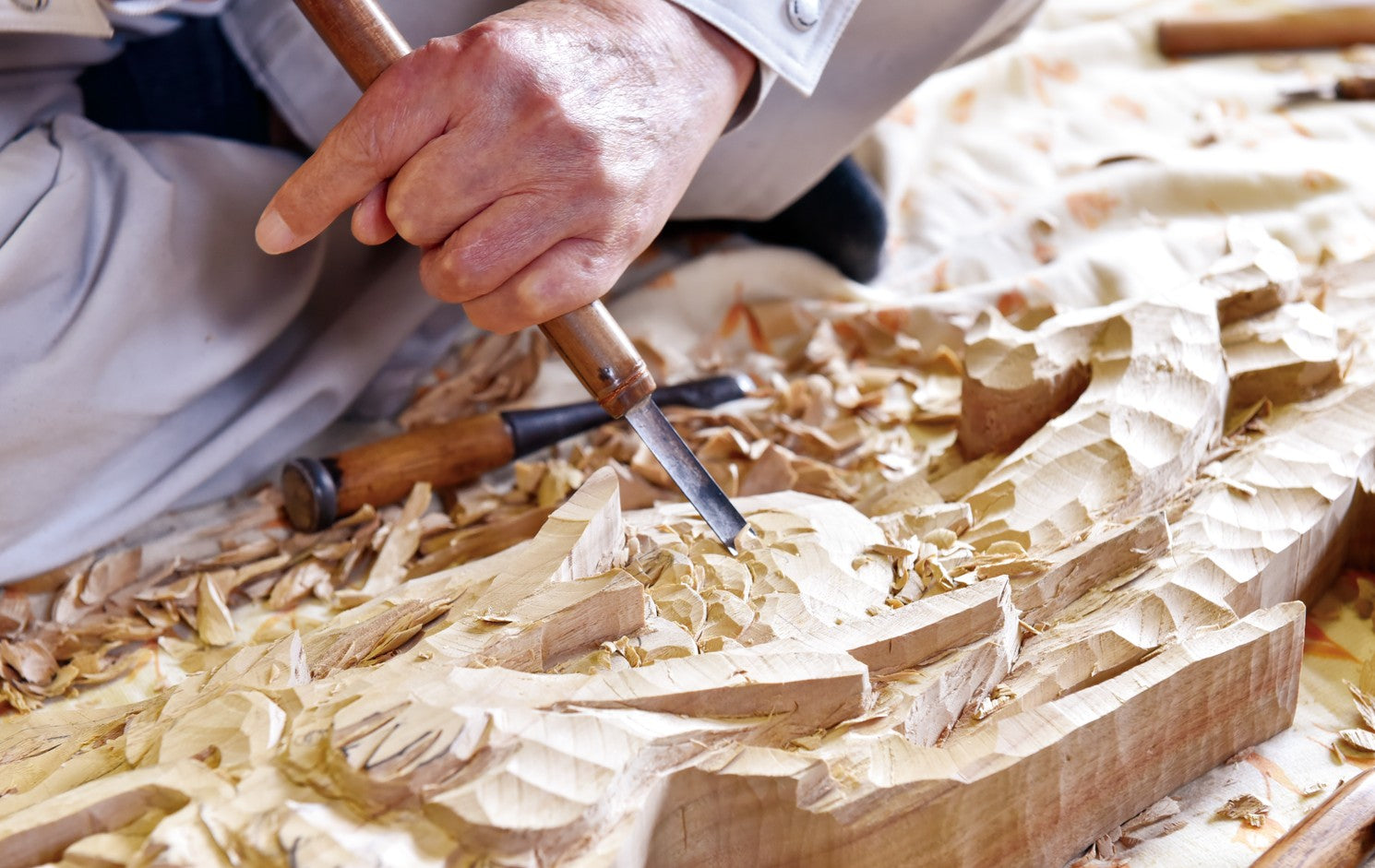
At the core of Wada Chokin Kobo is Japanese-style metal engraving: the technique of carving designs into metal using a chisel known as a tagane. This handcraft, long used for temple ornaments and Buddhist altar fittings, has changed little since the Meiji era.
For finishing, the workshop uses a traditional black coloring technique also found in Buddhist altar fittings made for temples and shrines. The deep black tone brings out the relief of the engraving and gives each piece a quiet presence. Brass, the material often chosen by the workshop, has also long been used for decorative metal fittings in sacred architecture. These are the foundations of a handcraft that has continued for more than 100 years.


3D Modeling and a New View of Pop Culture
One of the new perspectives brought into the workshop by fifth-generation craftsman Shunsuke Wada was the use of 3D modeling in the creation of original forms. Digital precision is used to build the structure of a design, while the final expression is completed by the hands of the craftsman. This process opens new possibilities for traditional engraving.
Another important shift was the way Wada began to reinterpret temple ornamentation as part of the same Japanese visual culture that appears in manga, anime, fashion, and tattoo art. Because he had experienced the world of images and storytelling, he could look at tradition and the present not as separate worlds, but as connected expressions.
Today
Connecting Tradition and the Present Through One Pair of Hands
Wada Chokin Kobo is not simply preserving traditional techniques, nor is it merely creating new designs. Its craft lies in moving between both worlds and bringing them together in a single form. The chisel marks of temple ornamentation leave their shadows on contemporary accessories. 3D modeling supports the precision of the underlying form, while the final expression is decided by the craftsman’s hand. The black finishing inherited from sacred objects gives quiet depth to pendants worn close to the body.
Neither purely traditional craft nor simply pop culture, the work of Wada Chokin Kobo moves across both. The workshop continues to explore what Japanese ornamentation can become in the present day.
From Places of Prayer to Everyday Adornment

The work of Wada Chokin Kobo is gradually expanding into new spaces. Techniques once used to support temples, shrines, and places of prayer are being transformed into adornments that accompany individual lives. Japanese ornamental motifs are being reimagined as products that can travel beyond borders.
Originally, the workshop created Buddhist altar fittings, ritual objects, and metal ornaments connected to the prayers of many people. Such work demands precision down to the smallest detail and a beauty that can endure over long periods of time. The eye and sensibility refined through objects meant to last for generations now live on in the details of smaller pieces made to be worn.
Dragons, phoenixes, hannya masks, skulls. The motifs engraved by Wada Chokin Kobo belong not only to temple ornamentation, but also to a visual language that has been loved across manga, anime, fashion, tattoo art, and many other fields. This is why the workshop’s accessories are more than decorative objects. They become an entry point into the aesthetics and stories of Japan.
From techniques born in places of prayer to adornments for daily life. From motifs cultivated in Japan to pieces worn by someone somewhere in the world. With a quiet presence, the metal engraving of Wada Chokin Kobo will continue to accompany the personal stories of those who wear it.

Written by TanakaAkira

Leave a comment
This site is protected by hCaptcha and the hCaptcha Privacy Policy and Terms of Service apply.